I have been living in Mexico for more than 15 years, and in that time I have watched foreigners arrive full of dreams and then quietly sabotage themselves with the same mistakes, over and over again.
Some of these mistakes cost people money directly. Others cost them something worse: opportunities they never even knew existed.
I have seen expats stay broke for a decade in a country where locals with half their skills were building wealth around them.
The frustrating part? Almost all of these mistakes are avoidable. I know, because I made a few of them myself before I corrected course.
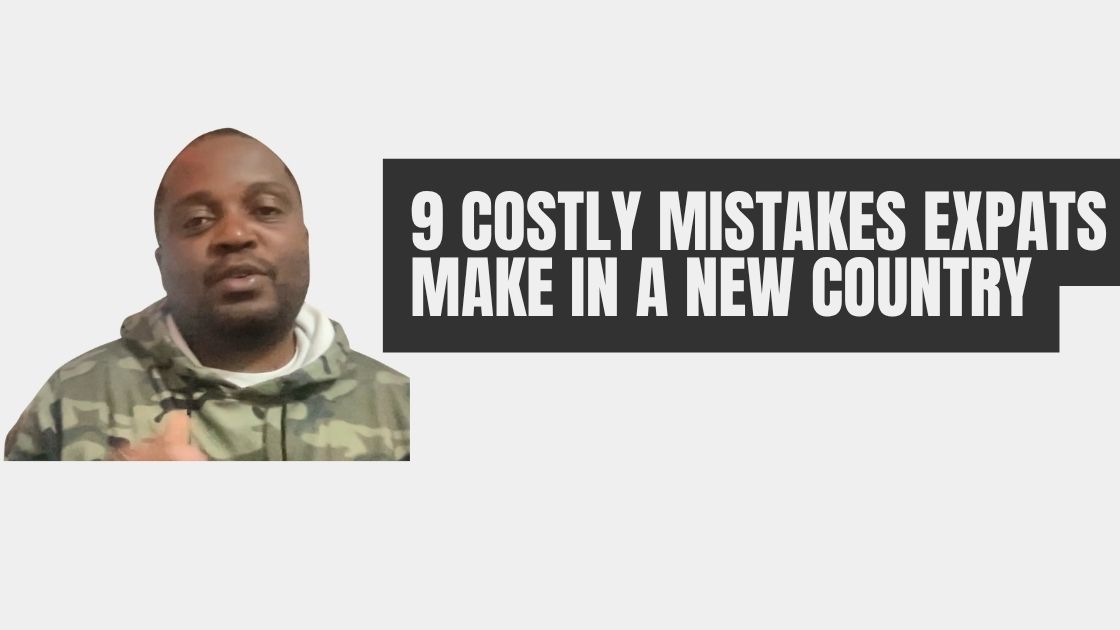
9 Costly Mistakes Expats Make in a New Country
Here are the nine costly mistakes expats make in a new country and what to do instead.
Not Learning the Local Language
This is the number one wealth killer for expats, and it is not even close.
I regularly meet foreigners who have lived in Mexico for more than three years and still cannot hold a basic conversation in Spanish.
Most people here speak Spanish, and only a small minority speak English. If you cannot communicate with 95% of the population, you have locked yourself out of 95% of the opportunities.
Here is what most expats never realize: the best deals are not advertised in English. A local guy who speaks zero English can offer you a business deal, a property, or a connection that changes your life, but only if you can talk to him.
Every deal I have closed here, every partnership, every “friend price” I have been given, happened in Spanish.
What to do instead
Treat language learning like a financial investment, because that is exactly what it is. Thirty minutes a day, every day. Speak badly and speak often. Locals respect the effort far more than perfection.
Not Immersing Yourself in the Local Culture
Foreigners often ask me for advice about dating in Latin America. I always tell them the same thing: if you want to date a Latina, learn to dance salsa.
It is not the only requirement, but it tells you everything about the principle. You have to get involved in the things locals actually do.
During this World Cup, I wore a Mexican national team jersey around town. Strangers stopped me to talk about the matches. People wanted photos with me.
And here is the thing most expats miss: those relaxed, human moments are exactly when deals and connections happen.
Nobody hands opportunities to the outsider standing at the edge of the room. They hand them to the guy celebrating the goal next to them.
Culture is not entertainment. Culture is the operating system of the economy you now live in.
What to do instead
Follow the local football team. Show up to the festivals. Eat where locals eat. Learn the jokes. Every cultural touchpoint you adopt is a bridge someone can walk across to bring you an opportunity.
Living in a Foreigner-Only Bubble
When I first arrived in Mexico, I lived in a neighborhood where all of us were Africans. It was comfortable. We listened to the same music, ate the same food, and told the same stories.
And guess what? We all had the same life. It felt like I had never left Africa. Same inputs, same outputs.
Everything changed when I moved into a Mexican neighborhood. I made Mexican friends. When I needed a job, they helped me find one.
Some of them even offered me partnerships in their local businesses. My network stopped being a mirror and started being a ladder.
I am not saying abandon your people or your identity. Never that. But sometimes changing your zip code in your new country is the single highest-return move you can make.
What to do instead
If more than 80% of your social circle looks and sounds like where you came from, you have recreated your old country with worse weather. Deliberately move physically or socially into local spaces.
Not Sharing Your Knowledge and Skills
If you have lived in a country for more than a year and you have real skills, hiding them is like burying money in the backyard.
In my years here, I have taught English, repaired computers, and installed solar panels in local communities. People know what I can do. And that reputation has compounded in ways I never planned.
I often receive emails from strangers, invitations to speak about African history, consulting gigs, and job offers, all because someone mentioned my name in a conversation I was never part of. That is what a real network does: it works for you while you sleep.
What to do instead
Pick one skill you have and make it visible. Teach it, offer it as a service, or simply help people with it for free at first. Your name will start traveling further than you do.
Not Building a Local Credit History
This one keeps people financially crippled for years, and they do not even see it happening.
I know foreigners who have lived in Mexico for more than seven years who cannot get a loan when they genuinely need one because on paper, they do not exist.
No local credit history means no leverage, no emergency options, and no access to the financial tools locals use to build wealth.
Here is the path I followed
- Open accounts with the big local banks in Mexico; that means BBVA, Banamex, Santander, and similar institutions.
- Accept the basic credit cards they offer you. They will be unimpressive at first. Take one or two anyway.
- Use them correctly: pay on time and in full, every single month, without exception.
- Let the system upgrade you. Good behavior gets rewarded with better cards, higher limits, and better financial products.
Because I did this, I was able to buy a house through Infonavit, buy a car, and qualify for a premium credit card (my Inbursa American Express).
I now have multiple pre-approved loans sitting ready if an emergency or an opportunity appears; I can access capital immediately and pay it back on my terms.
That is the difference between an expat who survives and an expat who builds. Credit history is not debt. Credit history is access.
Keeping All Your Money in Your Home Country
Many expats live in one country but bank entirely in another. Every purchase triggers foreign transaction fees. Every transfer loses money to exchange rate spreads. Over ten years, this quiet leak can add up to thousands of dollars handed to banks for nothing.
Worse, it signals to the local financial system that you are a tourist, not a resident, which loops right back into mistake number five.
What to do instead
Keep an anchor account back home if you like, but move your day-to-day financial life to where your day-to-day life actually is. Earn, spend, save, and build locally first.
Paying the “Foreigner Price” for Everything
In many countries, there are two prices: the local price and the price for someone who does not know better. Rent, repairs, services, and even market vegetables. If you do not know the real price, you will pay the inflated one every single time.
I have seen expats pay 30–50% above market rent for years simply because they never asked a local friend, “Is this normal?”
Notice how this mistake is really a symptom of mistakes one through three. If you speak the language, live among locals, and have local friends, the foreigner price disappears almost automatically because you are no longer a foreigner in the way that matters.
What to do instead
Before any significant purchase or contract, ask at least one local what they would pay. Negotiate politely. In most of the world, negotiation is expected, not rude.
Ignoring Local Investment Opportunities
Expats often assume that “real” investing only happens back home or in US markets. Meanwhile, locals around them are using government-backed instruments, local retirement systems, property programs, and small business opportunities that foreigners are often fully entitled to use but never bother to learn about.
In Mexico, for example, my path to homeownership ran through Infonavit, a program many foreigners with formal jobs qualify for and have never even heard of.
Whatever country you live in, there is likely a local equivalent: subsidized housing credit, tax-advantaged retirement accounts, and government bonds paying respectable yields.
What to do instead
Spend one weekend researching what financial programs legal residents can access in your country. Ask coworkers what they invest in. The answers may surprise you.
Not Formalizing Your Legal and Tax Situation
Living in the gray zone, with unclear residency status, no local tax ID, and everything informal, feels cheaper in the short term. In the long term, it is one of the most expensive positions you can hold.
Without proper status and registration, you often cannot open good bank accounts, cannot build a credit history, cannot access housing programs, cannot legally invoice clients, and cannot start a formal business. Every wealth-building door in this article stays locked.
What to do instead
Get your residency solid, get your tax ID, and understand your basic obligations in both your new country and your home country. The paperwork is boring. The doors it opens are not.
The Common Thread: Integration Is a Wealth Strategy
Look back at all nine mistakes, and you will see the same pattern. Every one of them comes from treating your new country like a hotel instead of a home.
The expats who stay broke keep one foot out the door linguistically, socially, and financially. The expats who build wealth plant themselves fully: they speak the language, live among locals, contribute their skills, and plug into the local financial system.
After more than 15 years in Mexico, I can tell you the formula is not complicated. Integrate deeply, build locally, and let time compound your roots the same way it compounds your money.
Which of these mistakes have you seen or made yourself? I would love to hear your story in the comments.