

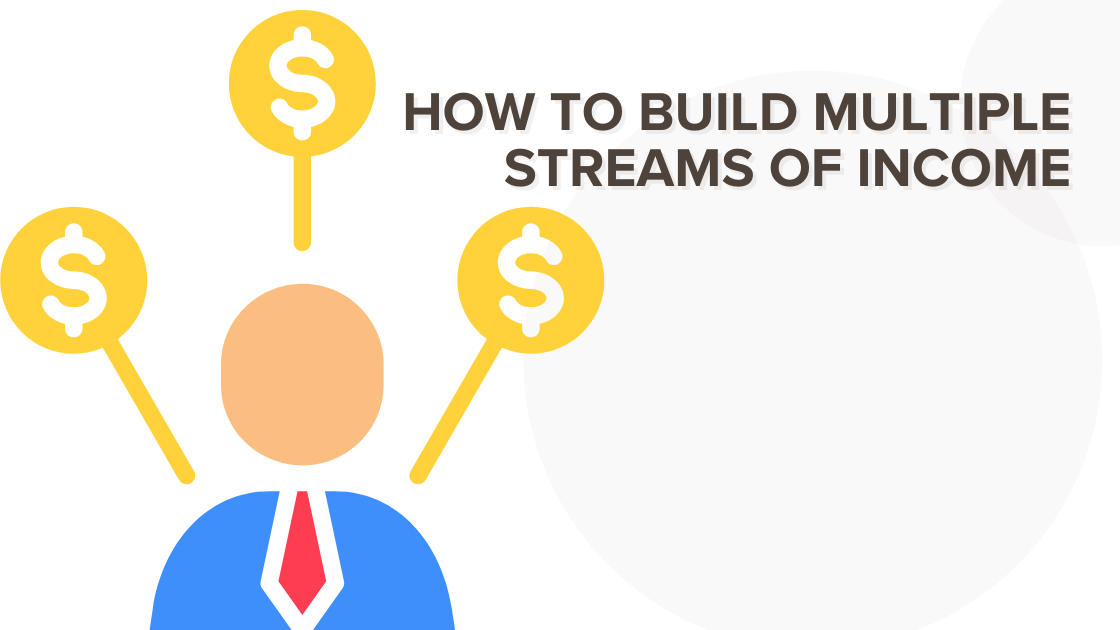
The average millionaire has 7 income streams. This statistic should indicate that to become wealthy, you need to create multiple streams of income.
Why do you need multiple streams of income?
Relying on a single paycheck is one of the major financial risks most people take, often without realizing it. A job can disappear overnight due to layoffs, automation, health issues, or economic downturns.
That’s why building multiple streams of income is no longer just a “nice to have” but a smart long-term strategy for financial stability, faster wealth creation, and lifestyle flexibility.
Multiple streams of income mean earning money from more than one source, instead of depending entirely on a single job or business.
These income sources can be active, passive, or a combination of both, and they can grow over time into a powerful financial safety net.
In this guide, you’ll learn what multiple streams of income are, the different types available, popular ideas you can start today, and how to build them responsibly without overwhelming yourself.
What Are Multiple Streams of Income?
Multiple streams of income refer to earning money from various sources simultaneously, rather than relying on one primary paycheck.
These income streams can include.
- A full-time job plus freelancing
- A business plus investments
- Active side hustles combined with passive income sources
The goal isn’t to work nonstop. The goal is diversification, so if one income source slows down or disappears, the others can keep you financially stable.
When done correctly, multiple income streams can help you in many aspects.
- Reduce financial stress
- Increase earning potential
- Create long-term wealth
- Provide flexibility and freedom
Types of Income Streams
Understanding the main categories of income helps you choose the right mix based on your skills, time, and risk tolerance.
Earned Income
Earned income is money you receive in exchange for your time and effort.
Examples include:
- Salary or hourly wages
- Freelancing or consulting
- Coaching or one-on-one services
This is the most common income stream and often the foundation that funds others. While earned income is reliable, it stops when you stop working—making diversification essential.
Business or Profit Income
Business income comes from owning or operating a business or side hustle.
Examples include:
- Online stores (Etsy, Shopify)
- Freelance agencies
- Dropshipping businesses
- Local service businesses
Unlike earned income, business income has scalability. With systems and processes, your income can grow without a direct increase in hours worked.
Investment Income
Investment income allows your money to work for you.
Dividends
- Paid by stocks, ETFs, or mutual funds
- Provide recurring income over time
Interest
- Earned from bonds, savings accounts, or loans
- Generally lower risk but slower growth
Capital Gains
- Profits from selling assets like stocks or real estate
- Often long-term wealth-focused
Investment income is a cornerstone of long-term financial independence.
Rental Income
Rental income comes from assets you own.
Examples include:
- Rental properties
- Spare rooms via short-term rentals
- Land or storage space
- RV or equipment rentals
Rental income can be semi-passive and powerful when managed correctly, but it also comes with responsibilities and upfront costs.
Royalty Income
Royalty income is earned from intellectual or creative assets.
Examples include:
- Books and e-books
- Online courses
- Music or photography
- Apps or software
This type of income often requires significant upfront work but can generate income for years afterward.
Popular Ideas for Creating Multiple Streams of Income
There are countless ways to build additional income streams. The key is choosing ideas that align with your skills, interests, and available time.
Consulting and Coaching
One of the fastest ways to create an extra income stream is by sharing your expertise.
If you already have professional experience, consulting allows you to:
- Start with minimal upfront costs
- Leverage existing knowledge
- Charge premium rates
You don’t need to teach what you do at your day job. Many people monetize hobbies or personal interests, such as photography, fitness, organization, or creative skills.
Side Hustles
Side hustles are active income streams that trade time for money.
Popular examples include
- Freelance writing or design
- Virtual assistant services
- Driving or delivery gigs
- Project-based consulting
These are ideal for generating quick cash while you build more scalable income sources.
Digital Products
Digital products offer high scalability and low overhead.
Examples include:
- E-books
- Online courses
- Templates and worksheets
- Software or tools
Once created, digital products can be sold repeatedly with minimal additional effort.
Content Creation
Content platforms can turn creativity and consistency into income.
Examples include:
- Blogging
- YouTube
- Podcasting
- Email newsletters
Often, you can monetize these streams through ads, sponsorships, affiliate marketing, or your own products.
Affiliate Marketing
Affiliate marketing allows you to earn commissions by promoting other companies’ products.
You earn money by:
- Recommending tools or services
- Sharing honest reviews
- Linking to products you already use
Affiliate marketing works especially well with blogs, email lists, and social media platforms.
Renting Assets
If you already own assets, you may be sitting on untapped income.
Examples include:
- Renting a spare room
- Leasing your car
- Renting tools or equipment
This approach monetizes what you already have, making it an efficient way to add income.
Benefits of Multiple Streams of Income
Building multiple streams of income offers benefits that go far beyond simply earning more money. It changes how you relate to work, risk, and long-term security.
Financial Security
One of the biggest advantages of having multiple income streams is protection. When you rely on a single paycheck, any disruption, layoff, illness, industry change, or economic downturn can immediately put you under financial pressure.
With multiple income streams, you’re no longer exposed to a single point of failure. If one source slows down or disappears, others can help cover essential expenses, reduce stress, and give you time to adapt instead of reacting out of panic. This kind of financial resilience is especially important in uncertain economic environments.
Faster Wealth Building
Multiple streams of income dramatically accelerate the wealth-building process. Instead of using your primary income just to cover living expenses, additional income can be directed toward saving, investing, and acquiring income-producing assets.
This creates a compounding effect:
Extra income leads to more investments, which in turn generate more future income.
Over time, this cycle accelerates progress toward goals like debt freedom, financial independence, early retirement, or generational wealth. Wealth is rarely built on a single income source. It’s built by stacking and reinvesting cash flow strategically.
Personal Growth
Creating new income streams forces growth, whether you plan for it or not. You learn new skills, improve problem-solving, and develop a more profound understanding of money, business, and systems.
You may also expand your professional network, gain confidence outside your primary career, and discover strengths you didn’t know you had.
These skills often transfer back into your main job or business, increasing your overall value and earning potential.
Flexibility and Freedom
Additional income creates options, and options create freedom.
With multiple income streams, you’re no longer trapped by a single employer or career path. You may choose to:
- Change industries
- Negotiate better working conditions
- Reduce hours without sacrificing income
- Take calculated risks on new opportunities
- Invest more aggressively in your future
Even if you never leave your primary job, the psychological freedom of knowing you don’t have to is powerful. Financial flexibility allows you to design a life based on choice, not necessity.
How to Create Multiple Streams of Income (The Right Way)
Building multiple income streams requires planning, discipline, and realistic expectations.
Check Employer Policies First
If you work full-time, review your employer’s policies on outside work. Some companies restrict side jobs or client overlap. Always ensure your additional income is ethical and approved.
Be Realistic About Time
Your time is limited. Before starting anything new, determine:
- How many hours per week can you realistically commit
- How will it affect family and personal time
- Whether the income potential justifies the effort
Consistency matters more than intensity.
Master One Revenue Stream First
Before adding multiple streams, build a solid foundation with one.
Mastering one skill or income source:
- Builds confidence
- Creates reliable cash flow
- Opens doors to future opportunities like speaking, teaching, or scaling
Trying to build everything at once often leads to burnout and failure.
Add Income Streams Gradually
More income streams mean more responsibility.
It’s usually best to:
- Add one or two new streams at a time
- Stabilize them before expanding further
- Avoid spreading yourself too thin
Each new stream requires setup, tracking, and maintenance.
Plan How You’ll Use Extra Income
Extra income shouldn’t disappear into random spending.
A smart approach is to:
- Reinvest earnings into income-producing assets
- Pay down high-interest debt
- Fund long-term investments
Treat extra income as a tool for building future wealth, not just lifestyle upgrades.
Balancing Active and Passive Income
A strong income strategy includes both active and passive elements.
- Active income provides immediate cash flow
- Passive income builds long-term leverage
Early on, you may rely more on active income. Over time, the goal is to shift toward income sources that continue paying you even when you’re not actively working.
Frequently Asked Questions About Multiple Streams of Income
What do multiple streams of income mean?
When I talk about multiple streams of income, I mean earning money from more than one source instead of depending on a single job or paycheck.
This can include a salary, side hustles, online businesses, investments, rental income, or digital products. The goal isn’t to do everything at once. It’s to reduce risk and build financial stability over time.
Why are multiple streams of income important in the U.S. and Mexico?
In both the U.S. and Mexico, relying on one income source is risky. Layoffs, inflation, medical expenses, or economic slowdowns can hit fast. Multiple income streams provide you with a buffer.
When one source slows down, they help you stay afloat and provide you with leverage to build wealth, rather than relying solely on a paycheck.
How many income streams should I realistically have?
I don’t think it’s necessary to chase a specific number. For most people, two or three well-built income streams are more powerful than five half-baked ones.
I always recommend mastering one primary income stream first, then adding others gradually as your skills, time, and cash flow improve.
What is the best income stream to start with?
The best place to start is with an income stream that uses skills you already have.
- Uses skills you already have
- Requires little to no upfront capital
- Can generate cash relatively quickly
For many people, that means freelancing, consulting, coaching, or creating a simple digital product. This applies whether you’re in the U.S. or Mexico. Skills transfer everywhere.
Are multiple streams of income the same as passive income?
No, and this is an important distinction. Multiple streams of income include active income and passive income. Early on, most of your income will be active.
Over time, the smart move is to reinvest that money into assets and systems that can eventually produce passive or semi-passive income.
Can I build multiple streams of income while working full-time?
Yes, and most people do. That said, I always stress two things:
- Check your employer’s policies on side work
- Be realistic about your time and energy
You don’t need to hustle 24/7. Consistent, focused effort beats burnout every time.
What are realistic passive income ideas for beginners?
Truly passive income takes time, but realistic starting points include:
- Dividend-paying ETFs or stocks
- Affiliate marketing through a blog or email list
- Rental income (property or spare space)
- Royalties from digital products
While none of these income streams require immediate attention, they have the potential to become more self-managing over time.
Do multiple income streams mean paying more taxes?
Potentially, yes, and that’s not a negative thing. More income usually means more responsibility. In both the U.S. and Mexico, it’s important to:
- Track income properly
- Understand deductions
- Separate personal and business finances
I strongly recommend working with a tax professional once your side income becomes meaningful.
Is it risky to have too many income streams?
Absolutely. One of the most significant mistakes I see is people trying to do everything at once. Each income stream comes with setup, maintenance, and decision-making.
I always advise adding income streams slowly and intentionally, not impulsively.
How long does it take to build multiple streams of income?
Active income streams can generate results within weeks or months. Passive or investment-based streams usually take longer, sometimes years.
The key is patience and consistency. Wealth is built through compounding effort, not overnight wins.
What should I do with extra income from side hustles?
This is where people either win or waste the opportunity. I don’t treat extra income as spending money. I use it to:
- Build an emergency fund
- Pay down high-interest debt
- Invest in assets that generate future income
That’s how extra income turns into long-term wealth.
Can multiple streams of income lead to financial independence?
Yes, when done intentionally. Multiple income streams reduce dependence on a single employer and give you control over your financial future.
Over time, they create options: better work-life balance, early retirement, or the ability to pass wealth to the next generation.
Final Thoughts: Why Multiple Streams of Income Matter
Multiple streams of income aren’t about working nonstop or chasing every opportunity. They’re about resilience, control, and long-term security.
By diversifying how you earn money, you reduce risk, increase opportunity, and create a financial foundation that supports your goals—whether that’s freedom, stability, or generational wealth.
Start with one stream. Build it well. Then expand strategically.
That’s how sustainable wealth is created.