For years, I kept hearing a phrase that made most people uncomfortable:
“The rich own nothing.”
Some hear it and immediately jump to extremes.
They assume secrecy.
They assume tax evasion.
They assume something illegal or hidden.
But that reaction itself reveals the real problem.
The truth is far less dramatic and far more important:
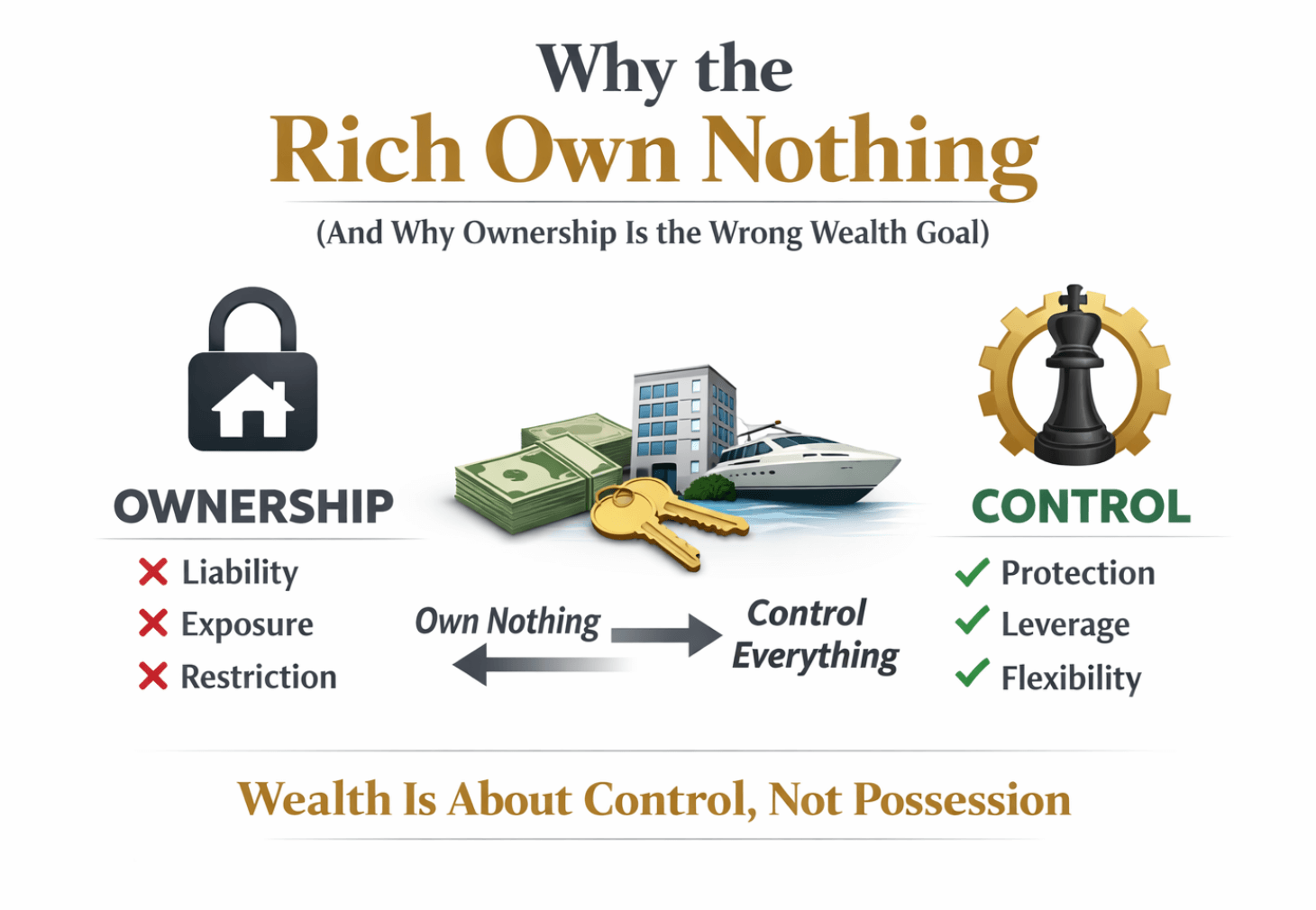
The wealthy are not trying to hide their assets. They are trying to protect them.
And once you understand this, your entire definition of wealth changes.
Real wealth does not revolve around ownership.
It’s about control.
The Origin of the Phrase “The Rich Own Nothing”
This idea didn’t come from a viral post or a conspiracy theory. It came from observation.
People started noticing a pattern:
- Wealthy individuals don’t personally own their businesses
- Their real estate isn’t in their personal name
- Their investments are held through entities
- Their wealth doesn’t appear “visible” in the way middle-class wealth does
So the assumption became: they must be hiding something.
That assumption is wrong.
What’s actually happening is structural.
The wealthy don’t think in terms of possessions.
They think in terms of systems.
And systems are built to survive stress.
The Biggest Myth: The Wealthy Are Trying to Hide Their Assets
Let’s clear this up immediately.
Asset protection is not asset hiding.
Hiding assets implies:
- Illegality
- Deception
- Secrecy
Protection implies:
- Planning
- Risk management
- Transparency within legal frameworks
The wealthy operate in the second category.
Their structures are documented.
Their entities are registered.
Their compliance is deliberate.
What they avoid is unnecessary exposure.
And exposure is what personal ownership creates.
Wealth Is Not About Ownership. It’s About Control
Ownership is emotional.
Control is strategic.
When most people say they want to be wealthy, what they really mean is:
“I want to own many things.”
But ownership comes with three invisible costs:
- Liability
- Rigidity
- Fragility
Control, on the other hand, gives you:
- Decision-making power
- Cash flow authority
- Strategic flexibility
You don’t need to own something to benefit from it personally.
- Benefit from it
- Profit from it
- Direct it
You just need to control it.
Why Personal Ownership Is One of the Riskiest Positions
Personal ownership feels simple.
And simplicity feels safe.
But simplicity is often expensive.
When assets are owned personally, they are exposed to:
- Lawsuits
- Creditors
- Business risks
- Personal disputes
- Estate complications
- Tax inefficiencies
One legal event can put everything at risk.
The wealthy understand something most people learn too late:
If everything is in your name, everything is on the line.
How the Wealthy “Own” Assets Without Owning Them
This is where confusion usually begins.
When people hear “the rich own nothing,” they imagine emptiness.
In reality, it’s the opposite.
Assets are held through:
- Businesses
- Holding entities
- Structured ownership layers
Why?
Because separation creates containment.
Each asset lives in its own environment.
Each risk is isolated.
Each income stream is protected from the others.
If one fails, it doesn’t pull everything down with it.
That’s not hiding.
That’s engineering.
Why Businesses Are Used as Containers
A business is more than a way to make money.
It’s a legal shield.
Businesses:
- Separate the individual from the asset
- Limit liability
- Create continuity
- Allow structured growth
The wealthy don’t fall in love with businesses.
They use them.
The business exists to:
- Hold assets
- Generate income
- Absorb risk
The individual exists to:
- Control decisions
- Design strategy
- Preserve long-term wealth
That separation is intentional.
Why the Middle Class Is Taught to Own Everything Personally
This isn’t an accident.
The middle class is trained to think:
- Ownership equals success
- Visibility equals achievement
- Simplicity equals safety
So they:
- Buy homes in their own name
- Run businesses personally
- Tie their identity to possessions
It looks stable until something breaks.
Wealthy families teach the opposite:
- Structure before scale
- Protection before growth
- Control before ownership
Different rules.
Different outcomes.
Control Allows the Wealthy to Use Leverage Safely
Leverage is dangerous without structure.
This is why leverage can lead to ruin for some individuals while creating empires for others.
The difference is containment.
When leverage is applied inside protected systems:
- Risk is limited
- Losses are isolated
- Decisions are reversible
When leverage is applied personally:
- One mistake affects everything
- Stress drives poor decisions
- Fear replaces strategy
Control gives leverage boundaries.
Ownership removes them.
The Difference Between Rich and Wealthy Thinking
Being rich is about appearance.
Being wealthy is about survival.
Rich thinking:
- How does this look?
- Can I afford this now?
- What does this say about me?
Wealthy thinking:
- What does this expose me to?
- How does this perform under stress?
- Will this still exist in 30 years?
Wealthy individuals design systems that have the potential to outlast them.
Ownership is temporary.
Structure is durable.
Read: Rich vs Wealth: Understanding the Key Differences
Read: Rich vs. Wealth: Are You Chasing The Right One?
Asset Protection Is a Generational Strategy
Wealthy families don’t think in decades.
They think in generations.
They plan for:
- Divorce
- Lawsuits
- Economic downturns
- Political changes
- Internal family conflicts
They don’t anticipate calamity, but rather, they honor reality.
They understand a simple truth:
You don’t lose wealth in good times. You lose it when things go wrong.
And things always go wrong eventually.
Why “Owning Nothing” Creates Peace of Mind
This is the part most people overlook.
Protected wealth is calmer wealth.
When assets are structured:
- Decisions are clearer
- Fear is reduced
- Emotion doesn’t control strategy
You’re not constantly worried about:
- One lawsuit ruining everything
- One mistake destroying years of work
- One event wiping out your family’s future
That peace is not accidental.
It’s engineered.
What This Means for Regular Earners and Builders
This concept is not reserved for billionaires.
You don’t need massive wealth to:
- Separate risk
- Use structure
- Think in systems
You need education and intentionality.
The shift begins when you stop asking:
“What can I own?”
And start asking:
“What should I control and how safely?”
That question changes everything.
Common Misunderstandings About Wealth Structures
“This is only for the ultra-rich.”
False. Structure scales with income.
“It’s illegal or shady.”
False. Most structures exist specifically because the law allows them.
“It’s too complicated.”
The complexity only becomes apparent once you comprehend the underlying principles.
Complexity disappears when the purpose is clear.
How to Start Thinking Like the Wealthy
You don’t need to rush into entities or structures.
You need to change your lens.
Start by understanding:
- Risk
- Exposure
- Control
- Separation
Wealth is not built by copying outcomes.
It’s built by adopting frameworks.
FAQ: Why the Rich Own Nothing
Why do the rich appear to own nothing?
The rich appear to own nothing because most of their assets are held through legal structures such as businesses or entities rather than in their personal name.
This isn’t about hiding wealth. It’s about protecting assets from risk, liability, and unnecessary exposure while maintaining full control.
Is it true that wealthy people don’t own assets personally?
In many cases, yes. Wealthy individuals often avoid personal ownership because assets held personally are more vulnerable to lawsuits, creditors, taxes, and estate complications. Instead, they use structures that allow them to control assets without personal exposure.
Are the rich hiding their money by owning nothing?
No. Asset protection is not asset hiding. Hiding assets implies secrecy or illegality, while asset protection involves transparent, legal structures designed to manage risk. The wealthy are not hiding wealth; they are organizing it intelligently.
What does it mean that wealth is about control, not ownership?
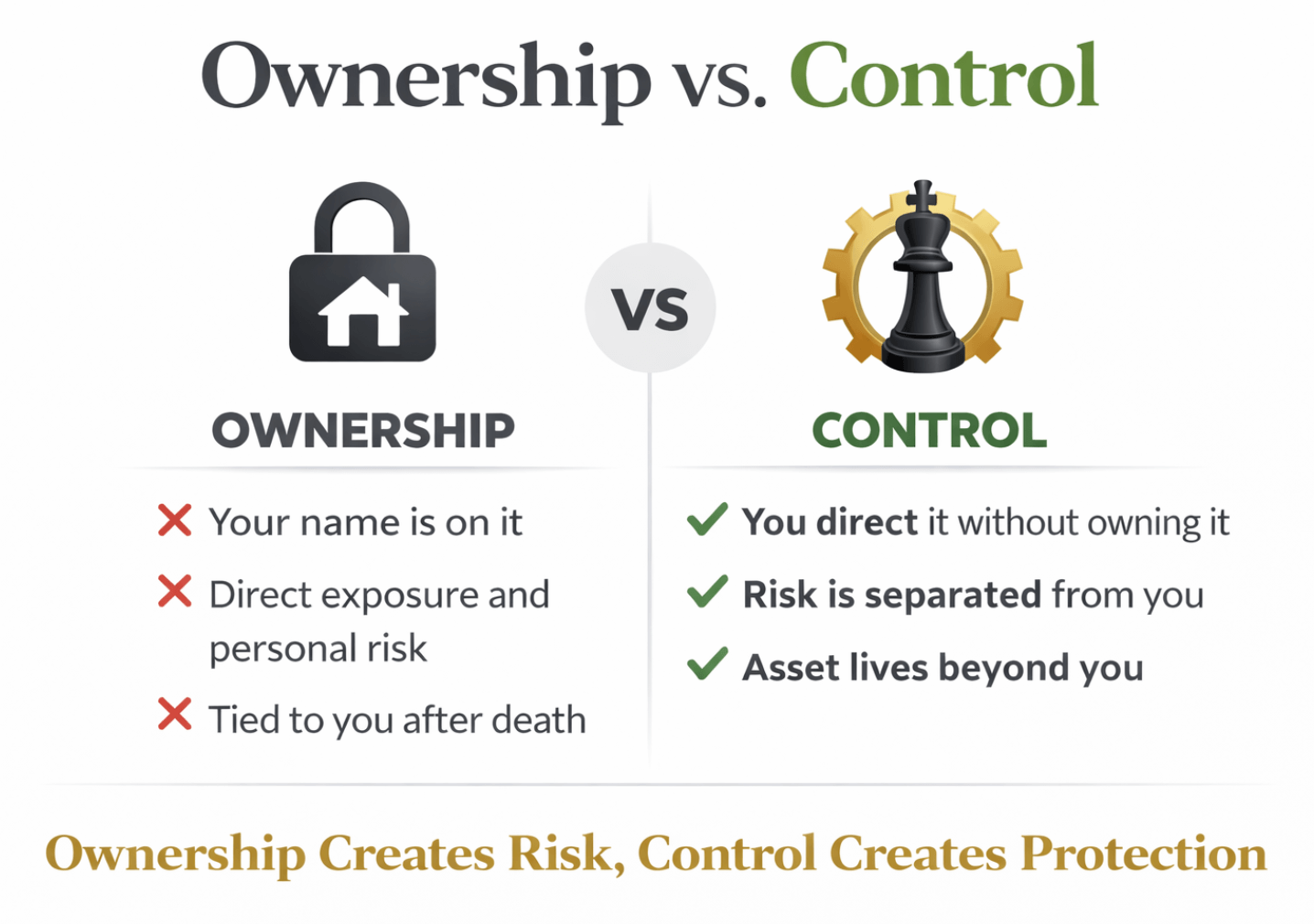
Ownership means your name is on the asset. Control means you decide how the asset is used, managed, and monetized.
Wealthy individuals prioritize control because it provides flexibility, protection, and long-term stability without the risks that come with personal ownership.
How do the wealthy control assets they don’t personally own?
They control assets through legal entities that grant decision-making authority, cash-flow rights, and strategic direction. Control allows them to benefit economically while keeping personal risk separated from the asset itself.
Why is personal ownership considered risky?
Personal ownership exposes assets to personal risks, such as lawsuits, divorce, debt, and probate. When you own everything personally, a single legal or financial event can threaten everything simultaneously. The wealthy reduce this risk by separating assets from themselves.
Is this strategy only for billionaires and ultra-rich families?
No. While the ultra-wealthy use these strategies extensively, the principles apply at every income level. Anyone building long-term wealth can benefit from understanding risk separation, control, and asset protection, even on a small scale.
Is owning nothing illegal or unethical?
No. The legal system explicitly allows asset ownership through structured entities. Businesses, investors, and families widely employ these strategies as standard risk-management practices, not as loopholes or gray areas.
Why isn’t such information taught in schools or personal finance books?
Most traditional personal finance education focuses on budgeting, saving, and personal ownership because those concepts are simpler to teach.
On the other hand, wealth education rarely emphasizes understanding systems, risk, and long-term planning.
Does owning nothing mean having no lifestyle assets?
Not necessarily. Many wealthy individuals still enjoy homes, cars, and experiences. The difference is how those assets are held and structured. Lifestyle enjoyment and wealth protection are not mutually exclusive.
What’s the difference between being rich and being wealthy?
Being rich is often about income and lifestyle. Being wealthy is about durability and survival over time. The wealthy focus on preserving assets through generations, not just accumulating possessions in one lifetime.
How can someone start thinking like the wealthy without being rich yet?
Start by shifting your mindset from ownership to control. Ask:
- What risks does this asset create?
- How exposed am I?
- How could this be structured more safely?
Wealth thinking begins long before wealth arrives.
Is owning nothing really the goal of wealth building?
No. The goal isn’t owning nothing. It’s owning wisely. The phrase “the rich own nothing” is shorthand for a deeper truth: true wealth is built through control, structure, and protection, not personal ownership alone.
Final Thought: Wealth Is What Survives When Things Go Wrong
Anyone can look wealthy in good times.
True wealth reveals itself under pressure.
When lawsuits happen.
When markets crash.
When relationships fail.
When life gets messy.
The wealthy don’t survive those moments by accident.
They survive because they are designed for them.
They don’t own nothing because they have nothing.
They own nothing because they understand what ownership really costs.
And once you understand that…
You stop chasing possessions.
You start building systems.
You stop thinking short-term.
You start thinking generationally.
That’s not hiding wealth.
That’s protecting it.