
Moving to Colombia can be an exciting opportunity. Whether you are relocating for work, starting a business, retiring, studying, or simply looking for a better lifestyle, Colombia offers plenty of opportunities for foreigners who want to build a new life in Latin America.
But there is one mistake many expats make when moving to a new country: they focus on finding an apartment, exploring their new city, and adjusting to the culture while overlooking their financial foundation.
Without proper financial planning, something as simple as receiving an international transfer, opening a bank account, or paying your monthly bills can become unnecessarily complicated.
And if your long-term goal is to build wealth rather than simply survive financially, the decisions you make during your first few weeks in Colombia matter.
In this guide, we’ll cover the first five financial things to do when you arrive in Colombia as a foreigner, including banking, taxes, budgeting, credit, and investing.
Whether you’re moving to Bogotá, Medellín, Cali, Cartagena, or another Colombian city, these steps will help you establish a stronger financial foundation.
Understand Colombia’s Banking System and Open the Right Account
One of the first financial priorities when arriving in Colombia is figuring out how to manage your money.
You may already have a bank account in your home country, but relying entirely on foreign accounts can make everyday transactions more difficult.
Colombia uses the Colombian peso (COP), and while international cards are accepted at many businesses, having access to local banking services can make paying rent, receiving income, and managing everyday expenses easier.
Can foreigners open a bank account in Colombia?
Yes, foreigners can open bank accounts in Colombia, although the requirements depend on the bank, your immigration status, and the type of account.
Foreign residents with a valid cédula de extranjería (foreigner identification card) generally have more banking options than short-term visitors.
Some banks and financial institutions may offer products to nonresidents, but you should never assume that arriving with a passport automatically qualifies you for a standard Colombian checking or savings account.
Popular banks in Colombia
Some of the financial institutions worth researching include:
| Bank | Why consider it? |
|---|---|
| Bancolombia | Extensive banking services and local payment infrastructure |
| Banco de Bogotá | Personal and business banking options |
| Davivienda | Digital and traditional banking services |
| BBVA Colombia | Banking services within an international banking group |
| Banco Caja Social | Savings and everyday banking products |
Account eligibility, fees, minimum balances, and documentation requirements can change, so compare the current terms before applying.
Documents you may need
Depending on the institution, be prepared to provide:
- Valid passport
- Colombian visa or proof of immigration status, when applicable
- Cédula de extranjería, if required
- Proof of residential address
- Colombian mobile phone number
- Evidence of employment, income, or source of funds
- Colombian tax identification information, if applicable
Banks may also request additional documentation under their anti-money-laundering and customer-identification procedures.
Should you keep your foreign bank account?
Absolutely consider keeping it, especially if you receive income from another country.
A practical financial setup for many expats is to maintain two separate banking relationships: a Colombian account for local spending and a foreign account for international income, savings, or financial obligations abroad.
This can provide flexibility, but you should review fees, exchange rates, account eligibility, and tax-reporting obligations.
Posterity Wealth tip
When moving large amounts of money into Colombia, compare the total cost of international transfers, including exchange-rate markups, intermediary fees, and receiving-bank charges. A transfer advertised as low-fee isn’t necessarily the cheapest option.
Understand Your Colombian Tax Obligations Before You Start Earning
Taxes are one of the most important and frequently misunderstood financial issues for foreigners moving to Colombia.
Some expats assume that if they earn money from a company outside Colombia, they do not need to worry about Colombian taxes.
That assumption can become expensive.
Colombia has tax residency rules that can affect your obligations even if your employer, clients, or investment accounts are located overseas.
When do foreigners become tax residents in Colombia?
Under Colombia’s general tax-residency framework, an individual may become a Colombian tax resident by spending more than 183 days in Colombia, continuously or discontinuously, during any consecutive 365-day period.
When that period spans two taxable years, residency generally applies from the second taxable year.
Other tax-residency rules may also apply in certain circumstances, particularly for Colombian nationals.
This is important because Colombian tax residents are generally subject to taxation on worldwide income, while nonresidents are generally taxed only on Colombian-source income, subject to applicable rules and treaties.
What is DIAN?
The Dirección de Impuestos y Aduanas Nacionales (DIAN) is Colombia’s national tax and customs authority.
If you work, operate a business, earn taxable income, or engage in certain financial activities in Colombia, you may need to register with DIAN.
Two important terms are
- RUT (Registro Único Tributario): Colombia’s tax registration system.
- NIT (Número de Identificación Tributaria): The tax identification number assigned through the relevant registration process.
Not every visitor needs to register with DIAN simply because they enter Colombia. Your obligations depend on your activities and circumstances.
What if you work remotely for a foreign company?
Suppose you move to Medellín while continuing to work online for a company based in the United States.
You receive your salary in dollars in a US bank account.
Does that mean you owe no taxes in Colombia?
Not necessarily.
Your physical location while performing the work, tax-residency status, employment arrangement, applicable treaty provisions, and other factors can affect how that income is taxed.
The location of your bank account alone does not determine whether income is taxable in Colombia.
How to prepare financially
Before relocating or as early as possible after arrival, speak with a Colombian accountant who understands international taxation.
Ask about your tax-residency status, whether you need a RUT, foreign-income reporting, foreign-asset declarations, and the tax treatment of remote employment or business income.
If you have financial obligations in your home country, you may also need advice from a tax professional there.
PosterityWealth tip: Keep records of the dates you enter and leave Colombia. Also retain employment contracts, invoices, bank statements, and documentation of taxes paid abroad.
Effective recordkeeping can make international tax compliance significantly easier.
For official guidance on tax residency, consult DIAN’s tax-residency information. The 183-day rule is also explained in DIAN’s guidance.
Create a Realistic Budget Based on Your Colombian Lifestyle
One reason Colombia attracts foreigners is the possibility of enjoying a comfortable lifestyle at a lower cost than in many North American or European cities.
However, lower living expenses do not automatically mean better financial health.
Your actual expenses will depend heavily on where you live, your housing preferences, family size, transportation needs, and lifestyle.
For example, living in a furnished apartment in a popular Medellín neighborhood may cost significantly more than renting a modest apartment in a less tourist-oriented area.
How much money do you need to live in Colombia?
The following is an illustrative monthly budget for one adult living in a Colombian city. These are planning assumptions, not verified current market averages or rental quotes.
| Expense | Monthly budget (COP) |
|---|---|
| Rent | 1,500,000 |
| Groceries | 700,000 |
| Utilities and internet | 300,000 |
| Transportation | 250,000 |
| Healthcare | 350,000 |
| Dining and entertainment | 400,000 |
| Miscellaneous | 300,000 |
| Total | 3,800,000 |
Your actual budget could be considerably higher or lower.
A family with children, someone renting short-term accommodation, or an expat seeking a luxury lifestyle will need a different budget.
Don’t forget the hidden costs of relocating
Beyond your regular monthly expenses, consider.
- Security deposits and advance rent
- Temporary accommodation
- Furniture and household items
- Visa and immigration fees
- Health insurance
- International transfer fees
- Transportation and relocation costs
- Professional fees for accountants or lawyers
These expenses can quickly consume savings if you fail to prepare.
Build an emergency fund
Before focusing on aggressive investing, aim to establish an emergency fund covering at least three to six months of essential living expenses.
For example, if your essential monthly expenses are COP 3,000,000, a six-month emergency fund would be COP 18,000,000.
Keep emergency savings in accessible, relatively low-risk accounts, considering deposit protection, withdrawal conditions, and currency exposure.
Posterity Wealth tip
If your income is in dollars or euros but your expenses are in Colombian pesos, monitor your currency exposure.
Exchange-rate movements can change how much purchasing power your foreign income provides.
Start Building Your Financial and Credit History in Colombia
If you plan to live in Colombia for several years, establishing a local financial history can be beneficial.
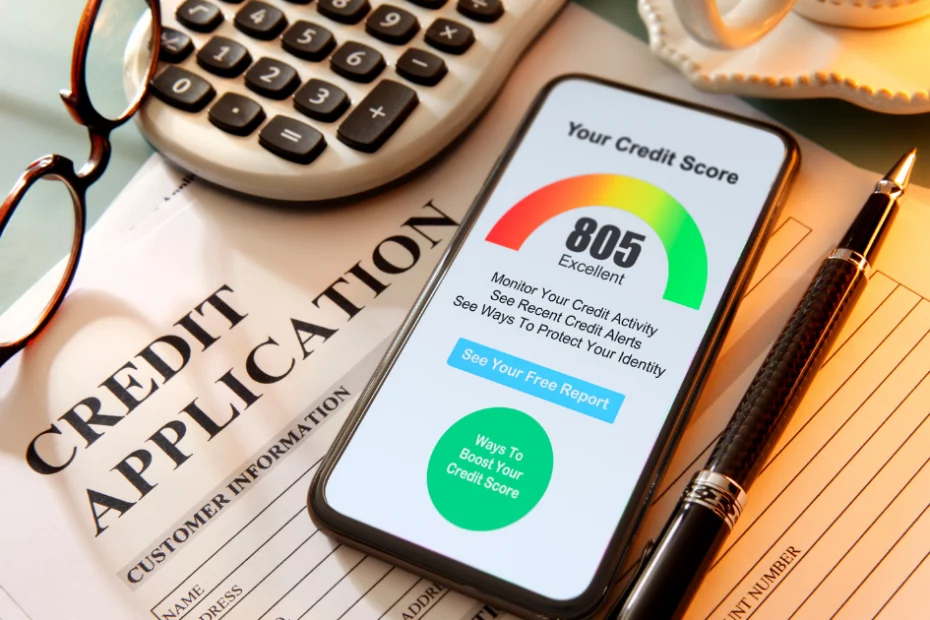
Your credit history from the United States, Canada, Mexico, or another country will not necessarily transfer into the Colombian credit-reporting system.
Even if you had excellent credit in your home country, you may initially have little or no local credit history.
Why does credit history matter?
A positive financial record may help you qualify for products such as credit cards, personal loans, vehicle financing, or mortgages.
It may also help financial institutions evaluate your reliability when you apply for certain products.
However, credit approval depends on more than your credit score. Income, immigration status, documentation, and the lender’s policies also matter.
How to start building credit
Begin by establishing a stable banking relationship and maintaining a reliable income record.
If you qualify for a credit card, consider starting with a modest credit limit and using it responsibly.
A simple strategy is to charge a small amount each month, such as groceries or a subscription, and pay the full statement balance by the due date.
Avoid borrowing money just to create a credit history.
Colombia’s credit bureaus
Two important names you may encounter are
- Datacrédito Experian
- TransUnion Colombia
These organizations collect and provide credit-related information that financial institutions may use when assessing borrowers.
Reviewing your credit information periodically can help you identify errors or unfamiliar obligations.
What about secured credit cards?
In some countries, secured credit cards are popular tools for people establishing or rebuilding credit.
In Colombia, product availability and eligibility vary by financial institution. Do not assume that a secured credit card commonly offered in another country has an equivalent Colombian product.
Instead, ask local banks about entry-level credit products, deposit-backed lending arrangements, and reporting to credit bureaus.
Posterity Wealth tip
Building credit is a long-term process. Consistent payments and manageable debt are more important than obtaining a large credit limit immediately.
Build a Long-Term Savings and Investment Strategy
Once you have established your banking arrangements, understood your tax obligations, created a budget, and started building your financial history, it is time to think about growing your wealth.
This is where many expats fail to take advantage of the opportunity.
They move to a country with potentially lower living expenses, enjoy their improved lifestyle, but never turn the difference into savings or investments.
If you can reduce your living expenses while maintaining a stable income, that difference can become a powerful tool for building long-term financial independence.
Start with a savings target
Suppose you earn COP 8,000,000 per month and spend COP 5,000,000.
That leaves COP 3,000,000 before any remaining taxes, irregular expenses, or other obligations.
Instead of allowing that surplus to disappear through lifestyle inflation, create a deliberate plan for it.
You might allocate money toward emergency savings, retirement investments, education, or building a business.
The right allocation depends on your personal circumstances and risk tolerance.
Investment options foreigners can explore in Colombia

High-interest savings accounts and CDTs
A Certificado de Depósito a Término (CDT) is a fixed-term deposit product offered by Colombian financial institutions.
It may suit money you can leave deposited for a specified period, subject to its terms, rates, taxes, and applicable protection limits.

Stocks, ETFs, and investment funds
Eligible foreign residents may be able to access Colombian or international investment markets through regulated intermediaries.
Compare investment fees, diversification, custody arrangements, tax treatment, and account eligibility.

Real estate
Property may be attractive for long-term residents, but ownership comes with legal, tax, maintenance, vacancy, and liquidity risks.
Foreign investors should seek legal advice on title verification and applicable foreign-investment registration requirements.

Business ownership and digital assets
Some expats build additional income through consulting, online businesses, digital products, or other ventures.
Verify that your immigration status permits the intended activity and that your business complies with Colombian registration and tax rules.
Don’t ignore currency diversification
If you plan to retire in Colombia, you may need substantial savings in Colombian pesos.
However, if you expect to return to your home country or have financial responsibilities elsewhere, holding all your investments in COP may create unnecessary currency concentration.
A diversified strategy might involve a combination of local savings, international investments, and assets denominated in different currencies.
Currency diversification does not eliminate risk, but it can reduce dependence on one country’s economy and exchange rate.
Posterity Wealth tip
Your goal should not simply be to live more cheaply in Colombia. It should be to use your financial opportunities to create long-term security, independence, and wealth.
Your First 30 Days Financial Checklist in Colombia
Moving to a new country involves many tasks, so it helps to organize your priorities.
Use this interactive checklist to track your progress during your first month.
Days 1–7: Establish the basics
[ ] Confirm immigration status and identification requirements
[ ] Compare Colombian banks and account eligibility
[ ] Arrange a safe way to access Colombian pesos
[ ] Track initial relocation expenses
Days 8–14: Organize your finances
[ ] Research Colombian tax residency and DIAN obligations
[ ] Contact a qualified Colombian accountant
[ ] Create a realistic monthly budget
[ ] Review health insurance and emergency savings
Days 15–21: Build financial stability
[ ] Complete local banking setup if eligible
[ ] Arrange recurring payments and recordkeeping
[ ] Research local credit-reporting systems
[ ] Compare transfer fees and exchange rates
Days 22–30: Plan for wealth
[ ] Set savings and investment goals
[ ] Review eligible investment options
[ ] Choose a sustainable monthly savings target
[ ] Schedule a financial review for the next three months
Common Financial Mistakes Foreigners Make in Colombia
Even experienced professionals and business owners can make financial mistakes when moving abroad.
Here are some of the most common problems to avoid.
Relying entirely on foreign bank cards
International cards can be convenient, but withdrawal fees, foreign transaction fees, and exchange-rate markups may add up over time.
Ignoring tax residency
Working for a foreign employer does not automatically exempt you from Colombian taxes.
Spending too much on housing
Attractive furnished apartments in popular neighborhoods can consume a large percentage of your income.
Failing to maintain emergency savings
Unexpected healthcare, travel, or immigration expenses can create financial stress.
Investing before understanding local regulations
Financial products, reporting obligations, and legal protections may differ significantly from those in your home country.
Assuming the cost of living will always remain low
Inflation, exchange rates, and changing personal circumstances can affect your budget.
Avoiding these mistakes will not guarantee financial success, but it can help protect the money you work hard to earn.
Frequently Asked Questions About Finances in Colombia
Can I open a bank account in Colombia with just a passport?
Some financial institutions may consider nonresident applicants, but a passport alone does not guarantee approval.
Standard accounts often require additional identification, immigration documentation, and proof of income. Confirm the current requirements directly with the institution.
Do foreigners pay income tax in Colombia?
Yes, foreigners may have Colombian income-tax obligations depending on their tax residency, source of income, and other circumstances. Staying more than 183 days within a consecutive 365-day period is a major residency criterion.
Can I live in Colombia while earning money from another country?
Potentially, yes, provided your immigration status permits your intended activities. However, remote employment, self-employment, and operating a business can have different legal and tax implications.
Is Colombia a good country for saving money?
Colombia can offer opportunities to save, particularly for people earning relatively high incomes from abroad.
However, savings depend on your spending habits, housing costs, exchange rates, and financial discipline.
Can foreigners invest in Colombian real estate?
Foreigners can generally purchase property in Colombia, subject to applicable laws and restrictions.
Professional title checks, tax advice, and foreign-investment compliance are important before buying.
Should I keep my savings in Colombian pesos or US dollars?
That depends on your future expenses, income, investment horizon, and currency risks. Holding money in multiple currencies may be appropriate, but it is not automatically the best choice for everyone.
Do I need a Colombian accountant?
Not every short-term visitor needs one. However, professional advice is strongly recommended if you become a tax resident, earn business or employment income, hold substantial overseas assets, or have financial obligations in multiple countries.
Final Thoughts: Build Wealth, Not Just a New Life in Colombia
Moving to Colombia is more than a geographical change. It can also be an opportunity to rethink how you manage your money and plan your financial future.
The first five financial steps are straightforward: establish your banking arrangements, understand your tax obligations, create a realistic budget, build your financial history, and develop a long-term savings and investment strategy.
You do not need to accomplish everything in your first week. But you should have a plan.
At PosterityWealth, I believe that living abroad should be more than an adventure. It should also be an opportunity to build financial stability and create something meaningful for the future.
Having built a life outside my home country, I understand that adapting to a different financial system takes patience, research, and sometimes expensive lessons.
That is one reason I believe financial preparation is so important for anyone starting over in a foreign country.
The objective is not simply to earn enough money to live in Colombia. It is to build a financial foundation that gives you more choices, greater security, and long-term independence.
Ready to Build Wealth as an Expat?
Moving to Colombia is just the beginning. What you do with your money after arriving can shape your financial future for years.
At PosterityWealth, we help expats understand the financial decisions involved in living abroad, from banking and budgeting to saving, investing, and building additional income streams.